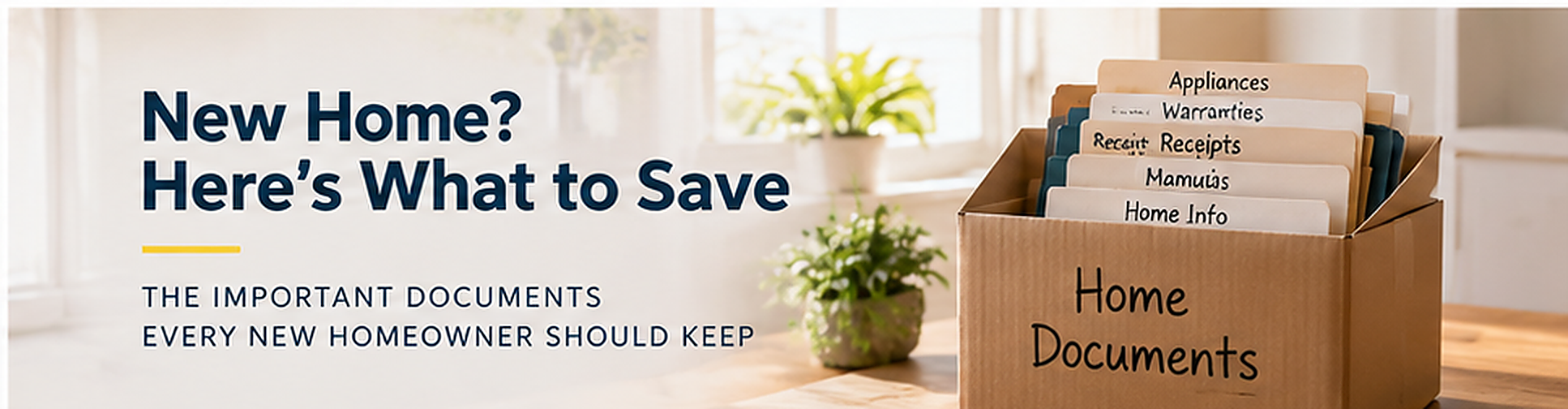
The New-Homeowner Paperwork Pile Has Entered the Chat
Congratulations on the new house. You have keys, possibly a suspicious number of cardboard boxes, and an impressive stack of documents that everybody assures you are important.
Some are. Some are already obsolete. Some will only become useful six months from now when you need to know who installed the water heater.
The trick is to save the records you'll need to answer actual questions, without taking a week off work to invent a filing system.
Here's a practical starting point.
Save the house-level documents first
Keep the core paperwork from the purchase in secure storage. Depending on your situation, that may include closing documents, a survey, inspection reports, property-related warranties, and information provided by the seller or builder.
Financial, legal, and identity-sensitive documents deserve more restricted storage than a general home inventory. Your home-information system can contain a note pointing to their secure location without copying every confidential document into it.
If you have a builder warranty, preserve its terms, key dates, and the correct service contact. If the property has an association, keep the useful rules and contact details somewhere accessible.
Photograph the information attached to the house
Before everything gets moved into place, take clear photos of key equipment labels and identifiers where safe to access:
- HVAC equipment and thermostat model.
- Water heater brand and model.
- Major kitchen and laundry appliances.
- Garage door opener.
- Any permanently installed equipment that uses a specific replacement part or filter.
This isn't a home photography contest. We're looking for readable labels, not dramatic lighting.
If the seller left manuals, sort them by the equipment that is actually in the home. The world's most organized binder of manuals from appliances that no longer exist is still the wrong binder.
Keep the contacts you're likely to need again
Save names and contact information for the plumber, HVAC company, electrician, pest service, landscaper, and anyone else whose work matters to your home. If you don't know who did the work, leave the field blank until you do.
Add service dates and invoices as work happens. A simple note saying “HVAC serviced in October; company and invoice attached” is already useful.
This is especially helpful when you need to explain a previous repair to a new technician without playing a game of telephone with yourself.
Write down the little details that disappear
Some of the most valuable home notes are the ones no standard form asks for:
Which paint color was used in the guest room? Which filter size fits the return? Where's the water shutoff? Which breaker serves the outdoor outlets?
Write down what you know, and verify anything you're not sure about. When documenting electrical panels or other potentially hazardous systems, don't attempt unsafe work to figure things out. Ask a qualified professional when needed.
These details are small until they're the detail you need right now.
Give your household one starting place
You can use a shared folder, a binder, or an app. Keep names understandable, organize documents around equipment or systems, and make sure the right people know where the information lives.
HomeNog lets you group items and home systems, attach supporting information, and save custom fields such as paint codes or installers. The point isn't to collect every bit of paperwork on moving day. It's to avoid repeating the same search every time the house asks a question.
Your first-week plan
On day one, secure your important purchase documents. Over the first week, capture the labels and manuals for your most important equipment. As you unpack, add service contacts and those odd little facts the previous owner shared.
Then stop. You've moved into a house, not a records-management department.
Start with one appliance and one useful detail. HomeNog can grow with your household as the real-life questions show up.